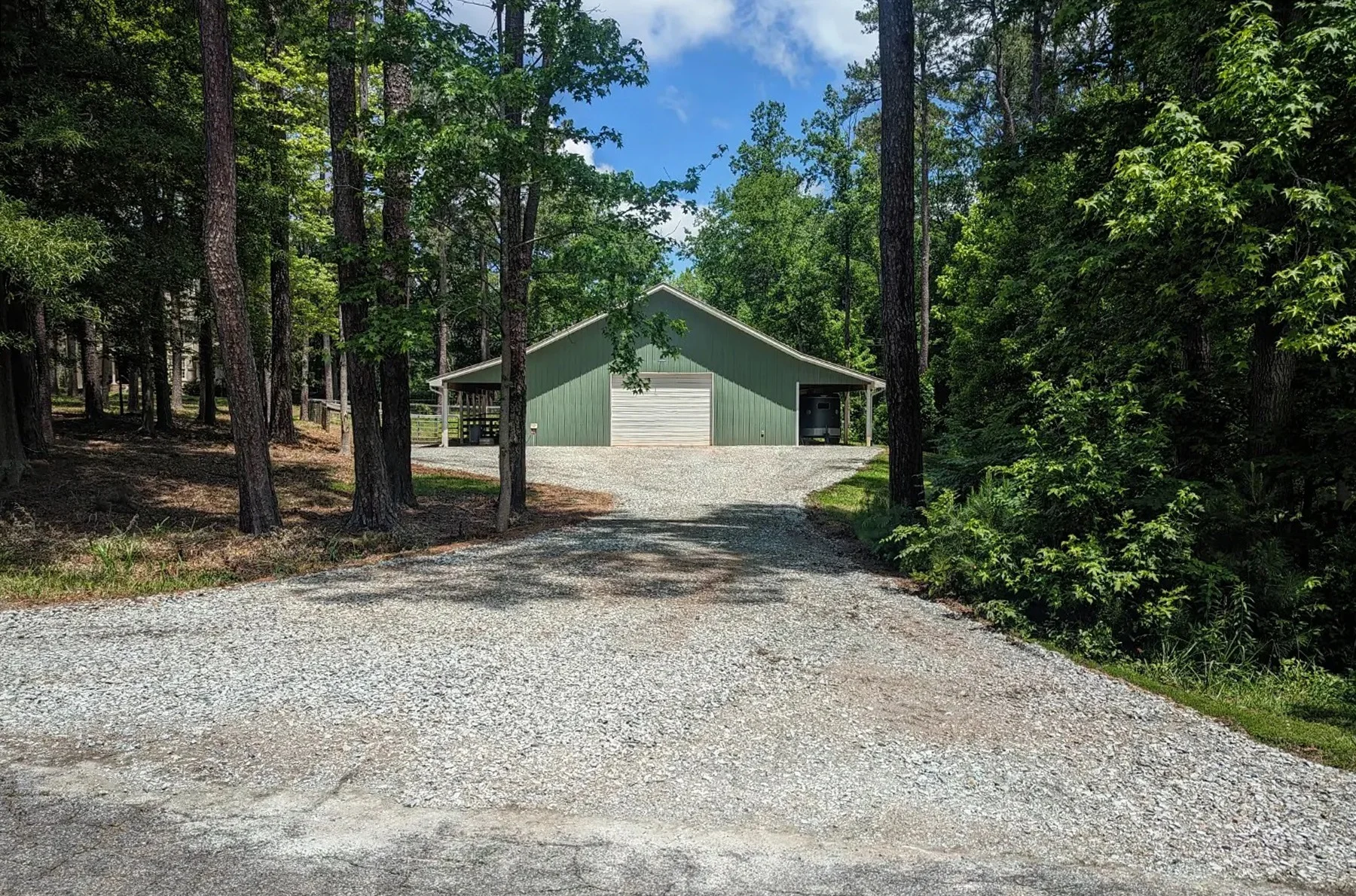
 Need help with your driveway?
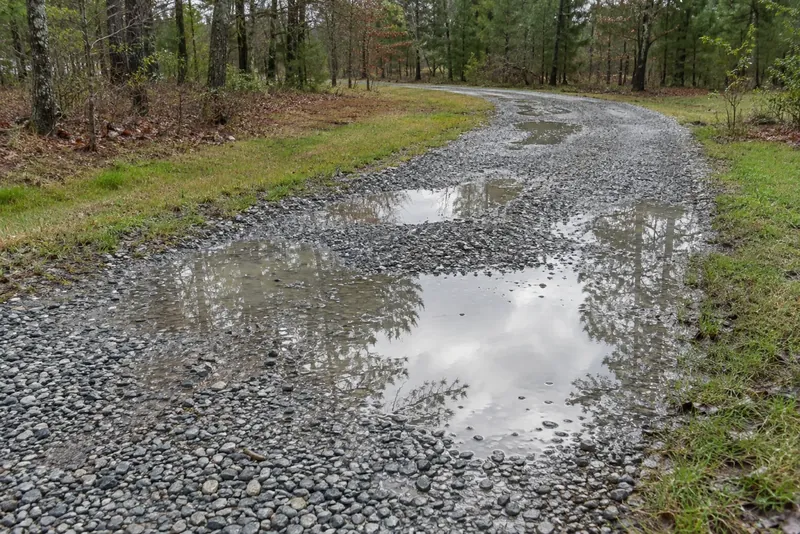
A well-built gravel driveway can provide years of dependable access to your home. But when drainage, grading, or the underlying soil is neglected, even a recently installed driveway can develop potholes, deep ruts, washouts, loose gravel, and standing water.
For homeowners in Chapel Hill, Pittsboro, Durham, Carrboro, Cary, Hillsborough, Graham, and surrounding North Carolina communities, these problems can be especially frustrating. Rolling terrain, clay-rich soils, heavy rainfall, and changing weather conditions can create driveway damage that a fresh load of gravel alone cannot solve.
The good news? Many failing gravel driveways can be repaired or restored without replacing the entire surface.
This guide explains how gravel driveway construction, drainage, grading, and maintenance work together. It also covers practical ways to diagnose common driveway problems, determine whether you need new gravel, and decide when professional gravel driveway repair or restoration is the better option.
Whether you are building a new driveway, maintaining a long private road, or trying to stop recurring potholes and washouts, understanding a few fundamentals can help you protect your investment and avoid unnecessary expenses.
1. Why Gravel Driveways Fail in North Carolina
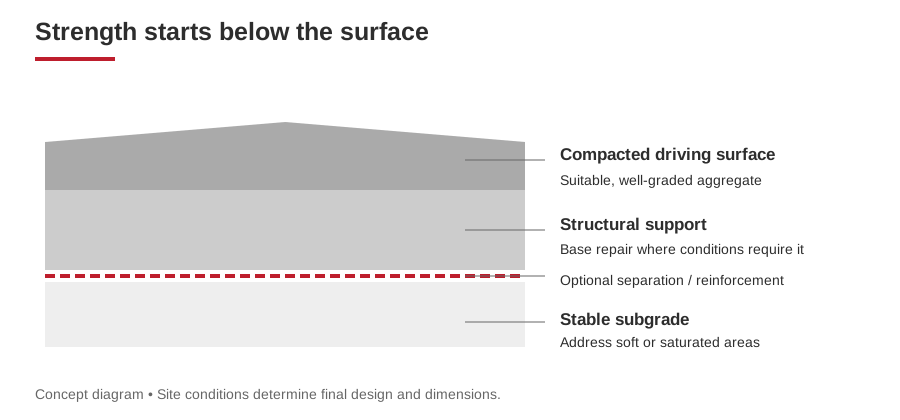
A gravel driveway may look simple, but its performance depends on several components working together.
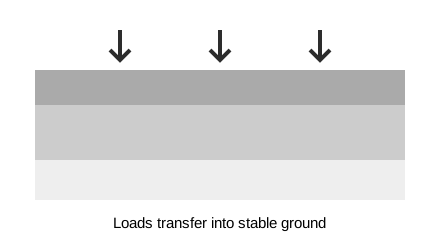
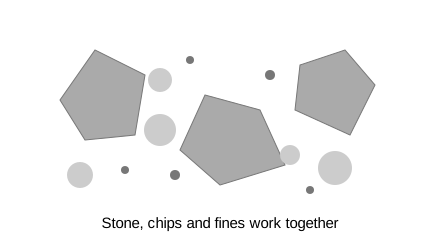
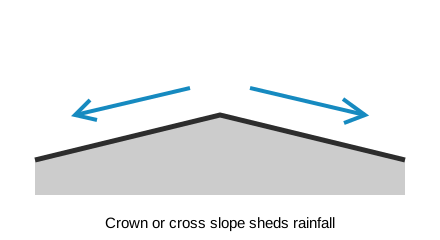
When one of these components fails, the others can deteriorate quickly.
For example, imagine a driveway with a smooth layer of new gravel. If the surface is flat and collects rainwater, the underlying material may soften. As vehicles pass over it, depressions form. Water collects in those depressions, and the damage grows.
This is why simply spreading new stone over an existing problem often provides only a temporary improvement. Effective gravel driveway repair addresses the cause of the damage, not just the visible potholes or ruts.
Common causes of gravel driveway damage
North Carolina gravel driveways commonly develop problems because of:
- Poor surface grading or an inadequate crown
- Water flowing down the driveway instead of across it
- Blocked ditches, swales, or culverts
- Soft clay soil or saturated subgrade
- Insufficient aggregate depth
- Poorly graded or unsuitable gravel
- Heavy trucks using a weak or wet driveway
- Gravel migrating toward the shoulders
- Erosion at driveway edges and drainage outlets
Identifying the cause is the first step toward choosing the right repair.
2. Gravel Driveway Foundations: What’s Under the Surface Matters
Before considering which gravel to purchase, evaluate the ground that will support it.
The underlying soil, known as the subgrade, carries the load transferred through the gravel. Weak or saturated subgrade soils may allow vehicles to create deep ruts even when the surface contains plenty of stone.
Common North Carolina driveway challenges
Properties throughout the Triangle and North Carolina Piedmont may encounter:
- Clay-rich soils that drain slowly when saturated
- Soft areas where water remains beneath the driveway
- Uneven ground with substantial elevation changes
- Areas where runoff crosses the driveway
- Heavy vehicle traffic, including delivery trucks and service equipment
- Driveway edges that erode during intense storms
- Seasonal changes that cause the soil to expand, soften, or shift
A driveway that supports passenger cars in dry weather might struggle when a loaded moving truck, concrete delivery truck, or construction vehicle travels over it after several days of rain.
How to build or repair a stronger driveway base
New gravel driveway construction may involve removing vegetation, topsoil, roots, and unsuitable material before placing and compacting appropriate aggregate.
Where the underlying soil is particularly weak, additional measures may be required, including:
- Excavating unstable material
- Adding suitable structural aggregate
- Improving drainage around or beneath the roadbed
- Using geotextile separation fabric or geogrid reinforcement where conditions justify it
Geotextile fabrics can help prevent certain soils from mixing with the aggregate, while appropriately selected geogrids can improve the stability of the aggregate system.
However, these materials are not substitutes for proper drainage or adequate gravel depth.
Homeowner tip: If your driveway repeatedly develops deep ruts in the same locations, the problem may be below the gravel surface. Regrading alone might not be enough.
3. Gravel Driveway Drainage: The Key to Preventing Potholes and Washouts
One of the most important principles in gravel driveway maintenance is controlling water.
Water sitting on a gravel driveway can weaken its surface and the soil beneath it. Water flowing too quickly across or along the driveway can carry valuable aggregate away.
How driveway crown and cross slope work
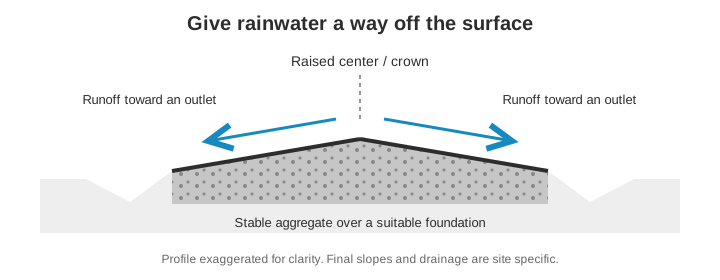
A properly shaped gravel road commonly has a slightly elevated center, known as a crown. Rainwater flows from the center toward both edges.
The Federal Highway Administration recommends a cross slope of approximately 4%, or roughly one-half inch of elevation change per horizontal foot, for typical gravel roads.
That is a useful reference—not a universal design requirement for residential driveways.
A home driveway may need a different slope or a one-direction cross slope depending on its width, curves, existing grade, connections, and drainage outlets. Excessive crown can also create vehicle-control problems.
The objective is straightforward: Move water off the driving surface without making the driveway uncomfortable or unsafe to use.
Where should driveway runoff go?
Removing water from the driving surface is only half the solution.
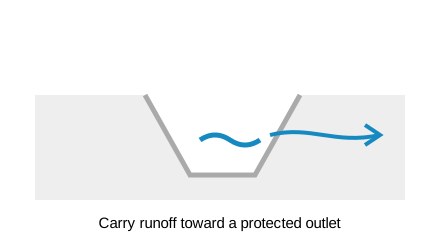
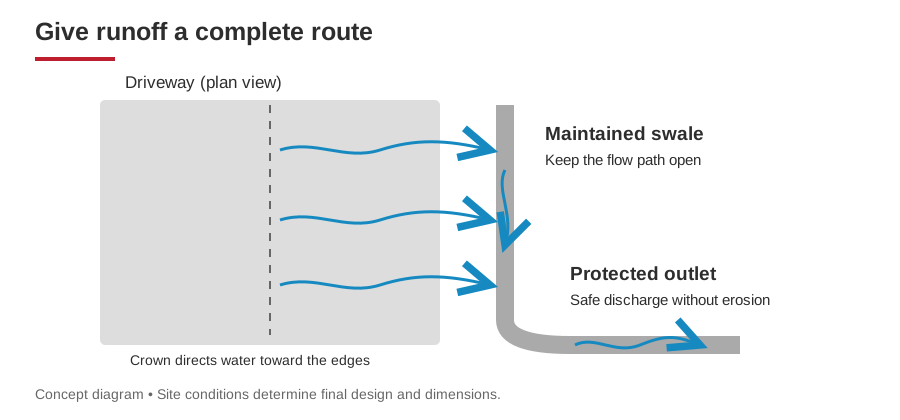
A complete gravel driveway drainage plan considers where runoff travels afterward.
Depending on the property, drainage improvements may include:
- Shallow roadside swales or ditches
- Culverts carrying water beneath the driveway
- Regrading adjacent ground to provide positive drainage
- Erosion protection at outlets and vulnerable slopes
- Subsurface drainage where conditions support its use
- Water bars or other slope-management features where appropriate
A drainage solution should not simply transfer the problem onto a neighboring property, toward a building foundation, or into an unprotected area vulnerable to erosion.
Why gravel driveways wash out on hills
On sloping properties, water can begin traveling down the driveway instead of across it.
As the volume and speed of runoff increase, fine material and loose stone may be displaced. Small erosion channels can become major washouts during repeated storms.
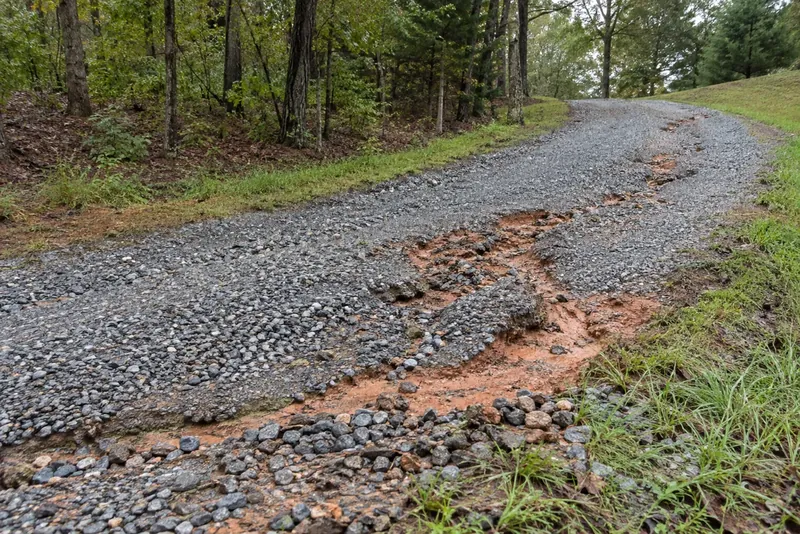
Repairing a washed-out gravel driveway may require more than replacement gravel. The solution could involve reshaping the driveway, intercepting runoff, improving drainage outlets, or installing properly designed culverts.
For properties with recurring washouts or standing water, Coob’s Landscaping offers drainage and erosion control services alongside gravel driveway restoration.
4. Choosing the Best Gravel for a North Carolina Driveway
Not all gravel performs the same way, and the most attractive stone is not necessarily the best material for a durable driving surface.
A stable gravel driveway generally requires a suitable blend of coarse stone, smaller particles, and fines.
Larger stone contributes strength. Smaller particles fill spaces between the stone. Appropriate fines help the material bind together when compacted.
ABC stone, crusher run, and #57 stone: What’s the difference?
ABC stone or crusher run
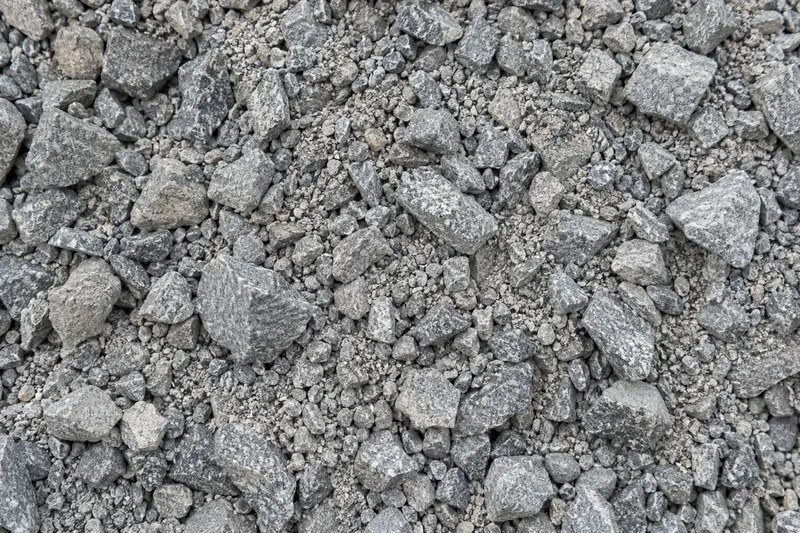
Aggregate Base Course (ABC), often called crusher run, typically contains angular crushed stone in a range of sizes, including finer particles.
When properly selected, placed, and compacted, the blend can form a dense, stable layer.
This makes it a common option for gravel driveway construction, repair, and restoration in North Carolina.
#57 stone
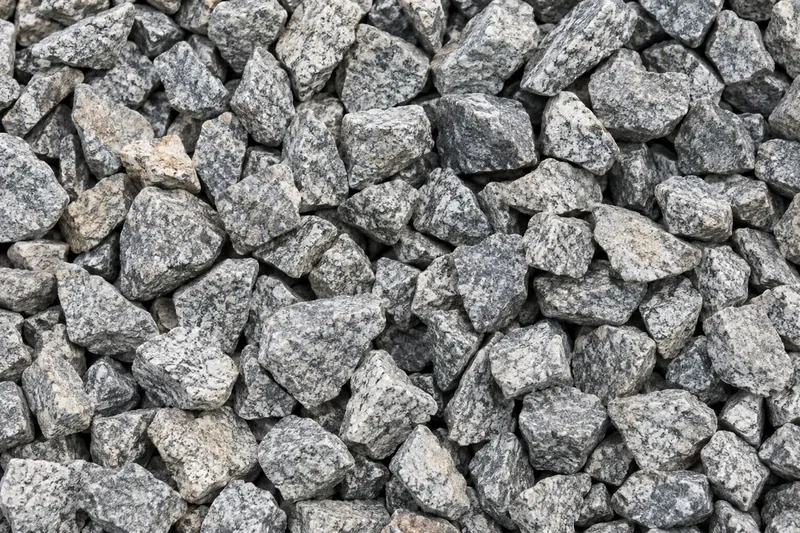
#57 stone is a more uniformly sized crushed aggregate, commonly around three-quarters to one-and-a-half inches in nominal size, depending on local specifications.
Because it contains relatively few fines, it has more open spaces between individual stones.
It can be useful in certain drainage applications and aggregate layers, but it does not compact and bind like a well-graded crusher-run mixture.
Using #57 stone as the entire loose driving surface may result in movement under tires, especially where the underlying surface is unstable.
Larger structural aggregate
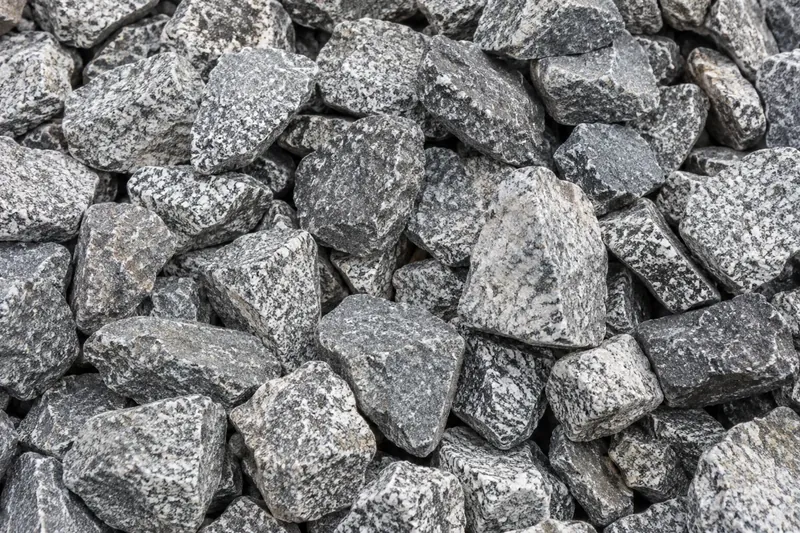
Larger crushed stone may be appropriate for some lower layers or weak areas as part of a properly designed aggregate system.
However, simply dumping large rock into mud is not a reliable substitute for evaluating the underlying soil.
Which gravel is right for your driveway?
The correct choice depends on:
- The strength of the existing base
- The driveway’s slope and drainage
- Vehicle types and traffic volume
- Available depth for the aggregate system
- Local material specifications and availability
- Whether the material is being used for a base, surface, or drainage layer
Often, the best result involves different aggregate characteristics for different purposes rather than using one material everywhere.
5. Gravel Driveway Grading and Compaction: Building a Stable Surface
Even high-quality gravel can perform poorly when installed incorrectly.
The FHWA emphasizes the importance of preparing the existing surface before adding new aggregate.
Potholes, washboarding, drainage problems, and severe rutting should be corrected rather than simply buried.
A practical gravel driveway repair and restoration sequence
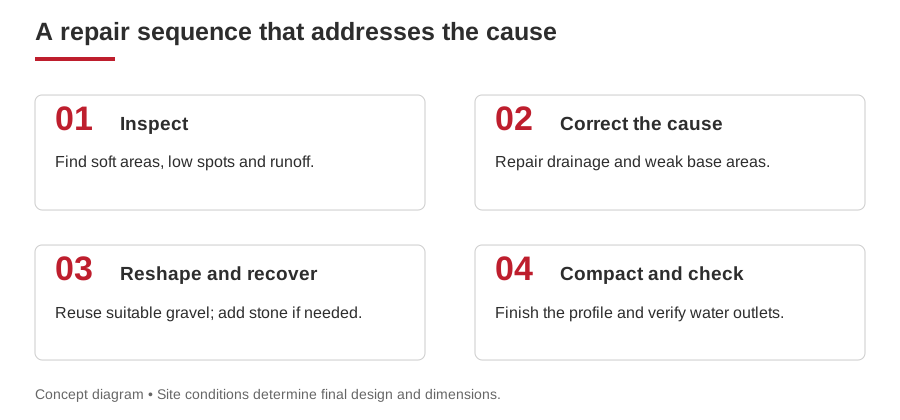
Step 1 — Inspect the existing surface. Identify low spots, poor drainage, unstable soil, and areas where aggregate has migrated.
Step 2 — Correct underlying problems. Address soft areas, drainage obstructions, and inadequate base support where necessary.
Step 3 — Regrade the driving surface. Establish an appropriate cross slope and smooth transitions so water drains as intended.
Step 4 — Recover usable gravel. Where suitable aggregate remains along the shoulders or elsewhere in the surface, it may be possible to loosen, redistribute, and reuse it.
Step 5 — Add aggregate only where needed. If the driveway lacks adequate material, place suitable stone in layers appropriate for the equipment and project.
Step 6 — Compact the surface. Proper moisture and mechanical compaction help aggregate particles settle together into a stronger, more stable layer.
Compaction is particularly important because freshly spread aggregate contains voids. Material that is not properly compacted may settle unevenly once regular traffic begins.
This is also why the finishing process should include shaping the surface and protecting its drainage profile—not simply spreading gravel until the driveway looks level.
Why grading matters during driveway restoration
Grading is not just cosmetic. It determines how rainwater moves across the property.
A driveway restoration that redistributes gravel without correcting the surface profile may look better temporarily but still allow water to collect in wheel paths or flow down the center.
Proper grading may involve reshaping the existing aggregate, rebuilding shoulders, correcting transitions, and improving the connection between the driveway and nearby drainage features.
6. How to Diagnose and Repair Common Gravel Driveway Problems
Different symptoms often indicate different underlying issues.
| Problem | Possible cause | Appropriate repair approach |
|---|---|---|
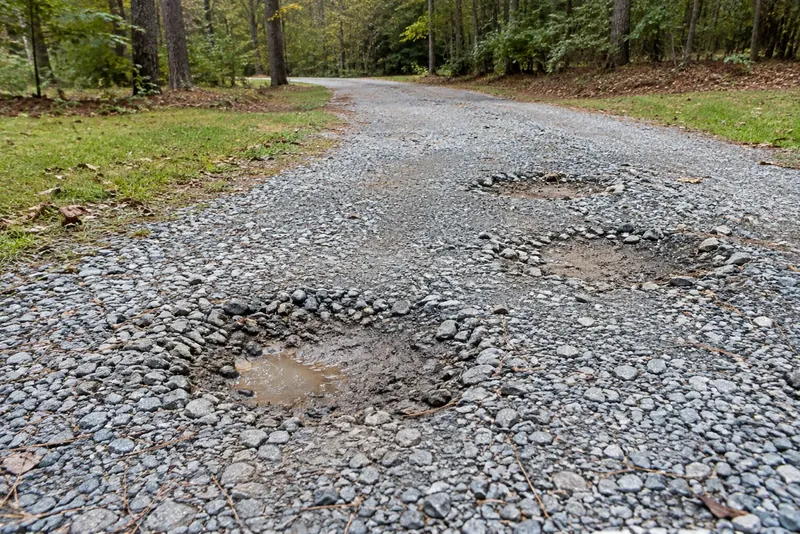
| Potholes | Standing water, displaced aggregate, inadequate surface shape | Remove or loosen damaged material, correct the profile, replace material if needed, and compact |
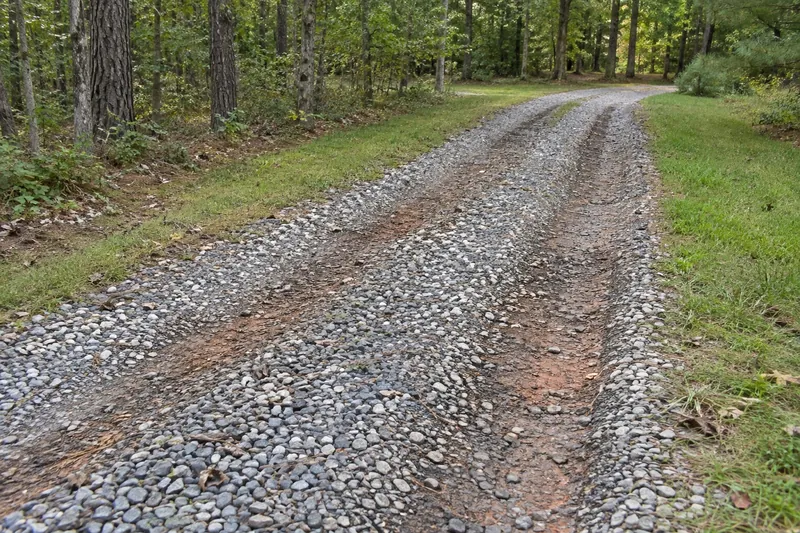
| Deep wheel ruts | Soft subgrade, insufficient base support, heavy traffic | Evaluate soil and base strength before rebuilding the damaged area |
| Washouts | Concentrated stormwater and uncontrolled runoff | Improve drainage and grading, then restore lost aggregate |
| Washboarding | Unstable aggregate, traffic effects, poor material gradation | Rework the ridges, reshape, and compact; evaluate aggregate quality |
| Standing water | Low spots, inadequate cross slope, blocked drainage | Regrade and establish suitable drainage outlets |
| Loose gravel | Poor material gradation, inadequate compaction, or stone migration | Recover and redistribute suitable material or replace inappropriate aggregate |
The important takeaway is that surface damage is often a symptom.
A repair that addresses the visible damage without considering why it formed may need to be repeated.
How to repair gravel driveway potholes
Potholes should not simply be filled with loose gravel. A more durable repair typically involves loosening or removing unstable material, correcting the surrounding grade, adding suitable aggregate where needed, and compacting the repaired area.
If potholes return after each rainfall, investigate drainage and subgrade conditions before adding more stone.
How to repair gravel driveway ruts
Ruts may result from heavy traffic, inadequate base support, saturated soil, or poor surface drainage.
Shallow ruts may respond to regrading and compaction. Deep or recurring ruts may require excavation, base repair, drainage improvements, or additional structural aggregate.
How to repair a washed-out gravel driveway
A washed-out driveway needs both surface restoration and water management.
Before replacing gravel, determine where runoff originates, how it reaches the driveway, and where it should be directed. Otherwise, the next major storm may remove the new material again.
How to fix standing water on a gravel driveway
Standing water usually indicates a low spot, inadequate cross slope, blocked drainage, or a saturated base.
The appropriate repair may involve regrading the surface, clearing a culvert, improving a swale, rebuilding a soft section, or creating a more suitable outlet for runoff.
Adding gravel to the lowest area without correcting the drainage pattern may simply raise the surface temporarily while leaving the underlying problem in place.
7. Can You Restore a Gravel Driveway Without Buying More Gravel?
In many situations, yes.
Over time, gravel can migrate from the primary wheel paths toward the sides of a driveway or accumulate unevenly across the surface.
The driveway may look worn out even though much of the original material remains on-site.
When the aggregate is still suitable and sufficient, a contractor may be able to loosen it, recover material from the edges, blend it back into the driving surface, restore proper grading, and compact it.
This can be more economical than routinely adding truckloads of new gravel.
Coob’s Landscaping reports that approximately 90% of its gravel driveway restorations do not require new gravel. That does not mean every driveway can be restored with existing stone; the condition of the aggregate, the base, and drainage must be assessed first.
When is new gravel necessary?
Additional material may be required when:
- A significant amount of aggregate has washed away
- The existing gravel is unsuitable or contaminated
- There is insufficient aggregate depth
- The underlying base requires structural repair
- A newly constructed or widened section needs additional material
- The driveway needs a different aggregate blend for improved stability
The goal should be to use the material that provides the best long-term performance, not simply to minimize the amount of stone purchased.
Explore Coob’s gravel driveway repair and restoration services.
8. A Practical Gravel Driveway Maintenance Plan for Homeowners
Gravel driveways require periodic attention, but maintenance does not need to be complicated.
Regular inspections can identify minor problems before they become expensive repairs.
After heavy rainfall
Walk or carefully inspect the driveway once conditions are safe.
Look for water standing in wheel paths, newly formed erosion channels, gravel deposited downhill, and debris blocking ditches or culverts.
If possible, observe where rainwater flows during a storm without entering moving water or unsafe areas.
During spring and fall
Check for developing potholes, loose gravel accumulation, vegetation growing into drainage channels, and changes to the driveway’s shape.
Clear manageable debris from drainage outlets where it is safe and lawful to do so.
Consider professional regrading when the driveway begins losing its drainage profile.
Before major deliveries or construction
A long gravel driveway may need to support much heavier vehicles than it encounters during normal use.
Before bringing in a moving truck, construction equipment, or heavy material delivery, consider whether the existing base, culverts, and access route can safely support the load.
When should a gravel driveway be regraded?
There is no universal schedule.
Maintenance frequency depends on rainfall, terrain, traffic, aggregate quality, and drainage performance.
A lightly used driveway with excellent drainage might require relatively infrequent attention. A steep private road with frequent deliveries may require substantially more.
The best time to make repairs is before small depressions develop into deep ruts and washouts.
9. Maintaining Long Private Gravel Roads in North Carolina
Long private roads often require more planning than shorter driveways.
A private access road serving multiple homes may need to accommodate delivery vehicles, waste collection, emergency vehicles, and higher traffic volumes.
Important considerations include usable road width, turning areas, slope, sight distance, drainage crossings, and adequate structural support.
Shared access roads also raise ownership and maintenance questions. Property owners should confirm easements, maintenance agreements, and responsibility for repairs before undertaking major changes.
Private road drainage and maintenance
Long gravel roads often collect runoff from a larger area than a single residential driveway. A small drainage issue near the top of a slope can become a major erosion problem farther downhill.
Private road maintenance may include:
- Cleaning and inspecting culverts
- Maintaining roadside ditches and swales
- Repairing eroded shoulders
- Reestablishing the road crown
- Restoring gravel lost from wheel paths
- Stabilizing drainage outlets
- Planning repairs before wet-weather access problems become severe
Where a new driveway entrance, culvert, or other work affects a public road or right-of-way, check requirements with the appropriate jurisdiction. North Carolina generally excludes routine individual residential driveway connections from certain state permit requirements, but exceptions apply, including potential safety and drainage concerns.
Major access roads, steep slopes, significant culverts, and challenging soil conditions may warrant site-specific engineering rather than relying on general residential construction advice.
10. When to Hire a Gravel Driveway Repair Professional
Some minor surface problems can be maintained by homeowners using appropriate tools.
But recurring damage often indicates a problem requiring grading equipment, drainage assessment, or repairs below the surface.
Consider professional gravel driveway repair or restoration when:
- Potholes return shortly after being filled
- Deep ruts develop in the same locations
- Water repeatedly crosses or travels down the driveway
- Gravel washes onto the lawn or neighboring areas
- Culverts overflow or remain blocked
- The driveway has become difficult or unsafe to navigate
- You are considering a major restoration or replacement
- Heavy vehicles need to use a weak or damaged driveway
- The driveway requires regrading, excavation, or mechanical compaction
- You are unsure whether the existing gravel can be reused
An experienced contractor should evaluate the existing material, soil conditions, drainage paths, and driveway shape before recommending repairs.
A useful site assessment should distinguish between:
- Surface maintenance
- Partial gravel driveway restoration
- Base or subgrade repair
- Drainage and erosion control
- Full driveway reconstruction
That distinction helps homeowners avoid paying for a complete replacement when targeted repairs may be sufficient.
Frequently Asked Questions About Gravel Driveway Repair and Maintenance
What is the best gravel for a residential driveway in North Carolina?
Well-graded crushed aggregate such as ABC stone or crusher run is commonly used where a dense, compactable driving surface is desired. Other stone types may be appropriate for drainage or structural layers.
The best gravel depends on the driveway’s soil, slope, drainage, traffic, and intended use. A material that works well on a flat, lightly used driveway may not be appropriate for a steep private road or an area with soft clay soil.
How do I repair potholes in a gravel driveway?
A durable pothole repair usually involves more than adding loose stone. The damaged area should be loosened or removed, the surrounding surface reshaped, suitable aggregate added if necessary, and the repair compacted.
If potholes return after rain, the underlying cause may be standing water, poor grading, or weak subgrade soil. Those issues should be corrected before repeatedly filling the holes.
Why does my gravel driveway keep washing out?
Repeated washouts usually indicate a combination of concentrated runoff, inadequate grading, erosion-prone areas, or unsuitable aggregate.
On sloped driveways, water may be traveling down the driving surface instead of draining across it. Restoring the gravel without addressing water movement may lead to recurring damage.
How do I improve drainage on a gravel driveway?
Start by identifying where water comes from, where it currently travels, and where it should safely discharge.
Possible improvements include restoring the driveway crown, regrading low areas, clearing or installing culverts, improving roadside swales, and protecting vulnerable outlets from erosion. The right solution depends on the driveway’s slope, soil, surrounding landscape, and local requirements.
How often should a gravel driveway be maintained?
There is no single maintenance schedule for every property. A driveway’s needs depend on rainfall, slope, traffic, soil conditions, gravel quality, and drainage.
Inspect the driveway after major storms and periodically during spring and fall. Regrading or drainage repairs may be needed when water begins pooling, gravel migrates, or ruts start to form.
Is it cheaper to repair a gravel driveway or replace it?
Repair or restoration is often less expensive when the existing aggregate and foundation remain serviceable.
If the underlying base has failed, drainage is severely inadequate, or significant material has been lost, more extensive reconstruction may be necessary. A site evaluation can help determine whether regrading, partial rebuilding, or full replacement makes the most sense.
How long does a gravel driveway last?
A properly constructed gravel driveway can remain serviceable for many years with appropriate maintenance. Its performance depends on the soil, drainage, traffic, aggregate quality, and frequency of repairs.
The surface will generally require periodic attention over its life. Promptly correcting drainage problems and minor rutting can help extend the driveway’s useful service life.
Can I repair a gravel driveway myself?
Homeowners may be able to address minor loose gravel or shallow surface depressions with appropriate tools and materials.
Professional help is usually advisable for deep ruts, recurring potholes, washouts, culvert problems, unstable soil, steep slopes, or repairs requiring grading and compaction equipment.
Protect Your Driveway With the Right Repair Strategy
A reliable gravel driveway is more than a layer of stone.
It requires a stable foundation, suitable aggregate, proper grading, effective drainage, and periodic maintenance.
The Federal Highway Administration’s guidance reinforces an important principle for homeowners: The best repair solves the conditions causing the damage, rather than covering them up.
At Coob’s Landscaping, we take that same practical approach to gravel driveway repair and restoration.
Owner-operated since 2012, Coob’s serves homeowners in Chapel Hill, Carrboro, Durham, Pittsboro, Cary, Hillsborough, Graham, and surrounding Triangle communities.
Whether your driveway has potholes, ruts, standing water, or recurring washouts, we’ll assess the existing conditions and recommend an appropriate solution.
Your driveway may not need replacing—and it may not even need new gravel.
Request a Free Gravel Driveway Assessment
Call (919) 218-0937 to discuss your driveway with Corby.
Technical references
This homeowner guide draws on the following public resources:
- Federal Highway Administration — Gravel Roads Construction & Maintenance Guide (2015), particularly the sections on road cross sections, drainage, surface gravel, and roadway preparation.
- North Carolina Department of Transportation — Driveway Entrance Rules.
The FHWA publication primarily addresses public gravel roads. Its principles have been adapted here for homeowner education and are not intended as universal construction specifications. Site conditions and applicable local requirements should determine final designs.